Additional Resources

Climate Change
Scientific Assessment Reports
The climate change scientific literature is extensive. Connections between human activities, climate change, and resulting impacts are synthesized in major scientific assessments.
We provide several suggestions here:
The Impacts of Climate Change on Human Health in the United States: A Scientific Assessment (2016).
The scientific report by the U.S. Global Change Research Program (USGCRP) synthesizes and discusses the effects of climate change on public health and social and environmental disparities based on peer-reviewed scientific literature

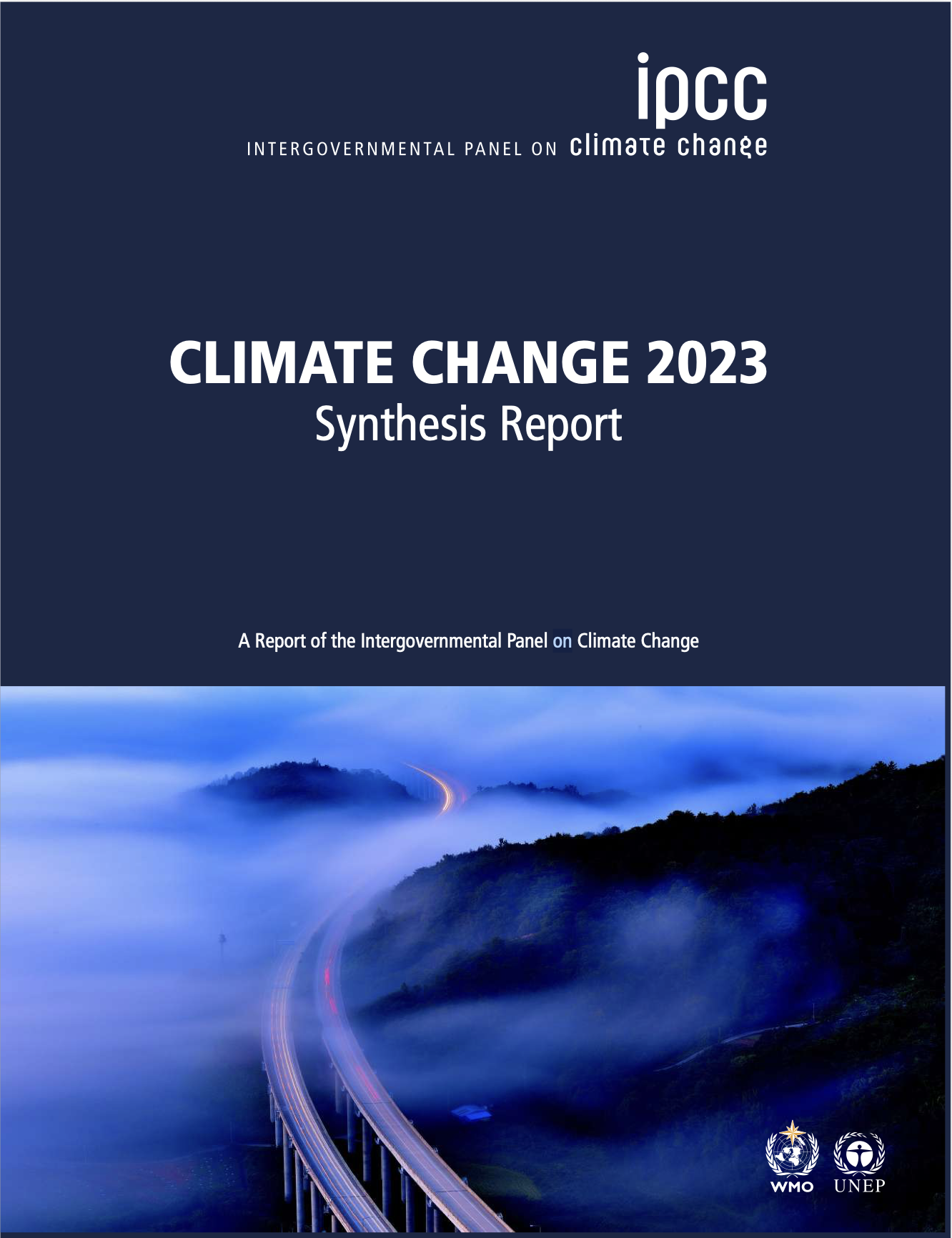
Climate Change 2023: Synthesis Report. Contribution of Working Groups I, II, and III to the Sixth Assessment Report of the Intergovernmental Panel on Climate Change.
The IPCC report summarizes scientific knowledge about global climate change, climate impacts and risks, associated uncertainties and potential mitigation pathways.
Fifth National Climate Assessment (2023).
Developed by the U.S. Global Change Research Program (USGCRP) this report is the most recent and comprehensive assessment of climate change in the United States.
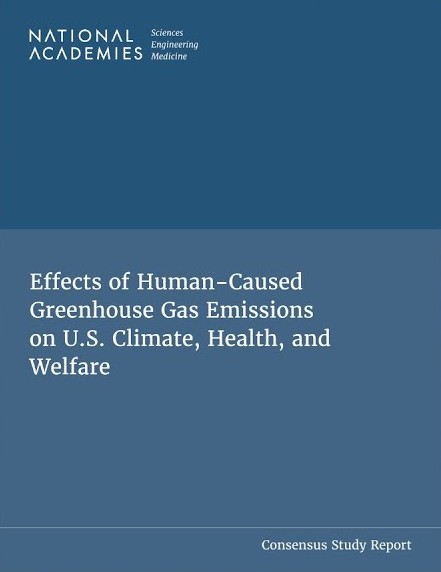
Effects of Human-Caused Greenhouse Gas Emissions on U.S. Climate, Health, and Welfare (2025).
The U.S. National Academies of Sciences, Engineering, and Medicine assessment of how human-caused greenhouse gas emissions affect U.S. climate, health, and welfare.
Additional tools and Indicator resources
Greenhouse Gas Inventory and Analysis GHGIA
https://ghgi.cgs.umd.edu/
University of Maryland’s Center for Global Sustainability (CGS) new annual non-governmental resource that supports continued understanding of U.S. emissions and sinks.
CDC Heat and Health Tracker
https://ephtracking.cdc.gov/Applications/heatTracker/
CDC’s Heat and Health Tracker is an interactive tool that provides local data across the United States on heat-related illness rates, heat risk, and heat and health index ratings.
CDC Environmental Public Health Tracking Network
https://ephtracking.cdc.gov/
CDC’s Environmental Public Health Tracking Network provides national and local data on environmental hazards, health outcomes, and population health through data visualizations, dashboards, and state tracking programs.
NASA Earth Indicators
https://science.nasa.gov/earth/explore/earth-indicators/
NASA’s Earth Indicators resource provides scientific data and visualizations on carbon dioxide, global temperature, methane, Arctic sea ice extent, ice sheets, sea level, and ocean warming.
Climate Central: Climate Change Indicators
https://www.climatecentral.org/tools/climate-indicators
Climate Central’s Climate Indicators resource tracks changes in global temperatures, greenhouse gases, sea surface temperatures, sea levels, and Arctic sea rise to illustrate human-caused climate change.
Lancet Countdown - Indicators
Our Indicators - Lancet Countdown
The Lancet Countdown on Health and Climate Change - Indicators provides a set of global and regional climate and health focused indicators.
Climate.us: Climate Data Primer
https://www.climate.us/maps-data/climate-data-primer
The Climate Data Primer resource helps users find and interpret climate data for real-world applications and decisions.
US Climate Resilience Toolkit
http://toolkit.climate.gov/
NOAA’s U.S. Climate Resilience Toolkit provides case studies, interactive tools, training courses, funding information, and a five-step framework to help people adapt to climate risks in their communities.
Climate Mapping for Risk and Analysis
https://resilience.climate.gov/
NOAA’s Climate Mapping for Risk and Analysis provides access to hazard maps for projected conditions related to common climate hazards to support adaptation planning.

GW Climate and Health Institute
950 New Hampshire Ave, NW, 101 — First Floor
Washington, DC 20052